
Verandah Ideas and Designs: A Homeowner’s Guide to Getting It Right the First Time
By: Colin Beer, registered builder in Gippsland under DB-U 12691
A verandah is the easiest part of your home to get wrong. This is why the right decision, starting at the design stage, sets you up for success.
The wrong roof darkens the lounge. A shallow depth leaves you wet in October. A bad angle bakes the kitchen by 3 PM. Most builders will not flag this in the quote.
35+
Google Reviews
Verified 5-star reviews from Gippsland homeowners via Trustmary
3D
Design Modelling
See exactly how your structure will look on your home before you commit
E2E
Permit Handling
Council approvals managed end-to-end. No paperwork headaches for you
DB-U
Registered Builder
Colin Beer, DB-Unlimited 12691, registered builder on every project
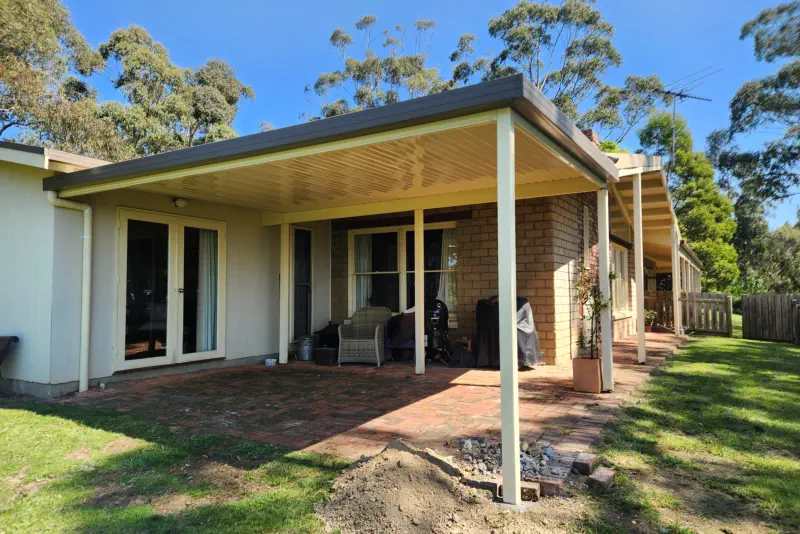
Verandah designs vary by the shape of your home, the way your block faces the sun, and how you want the space to feel. Gable, flat, curved, wraparound. Each one suits a different home. But the real choice is between light, shelter, and comfort.
After hundreds of verandahs built for Gippsland homes, three questions come up every time.
Will it darken the house? Will it really shelter us year-round? Will it be comfortable to use?
This guide walks you through each one. Let's get started.
What a Verandah Is and Why It's Not Just a Pergola or Patio
A verandah is a roofed structure attached to your home. It extends your indoor living space outward, under cover. The ceiling above your head is not the only thing it adds. It changes how the house lives, how the back door is used, and how the home reads from the street.
This all sounds simple. But the word veranda gets used loosely. The distinction matters more than most homeowners realise when they start sketching ideas.
A pergola has an open or partly open roof. Often freestanding, it defines an outdoor space without committing to full weather protection.
Think of it as a frame for a garden, a deck, or a quiet seat in dappled light. The shade is filtered, not full. The structure is a feature in the yard, not part of the home itself.
A patio is usually a paved area at ground level. The word describes the surface underfoot, not the structure above it. A patio may sit open to the sky, or under a separate cover. Either way, it is the floor plane that defines it.
A verandah is the only one of the three that is both roofed and attached. That is what makes it part of the home. A seamless extension of the interior into the open air. It is not a feature in the garden. This is also not a simple porch added without thought to the rest of the house design.
Verandah vs Pergola: Four Decisions to Consider When Building
Think you have already settled on the design you want? Hold that thought.
Run it through these four decisions first. Whichever way they land will tell you whether you are really building a verandah.
Roof: Shade, Light, and Every Room Behind It
A pergola lets sunlight through. The light filters down through open beams, soft and dappled, and the rooms behind it stay bright. A verandah commits to a roof material. That choice could be Colorbond, polycarbonate, an insulated panel, or even a curved roof on a heritage home. Whatever lands above your head will shape the light inside your home for the next twenty years. Pick well, and the kitchen behind the verandah stays calm and cool. Pick badly, and the same room reads as dim from breakfast onward.
Attachment: How It Looks From the Street
A pergola can sit anywhere on the block. Drop it next to the back fence, tuck it beside the pool, place it at the end of a garden path. It owes nothing to the house. A verandah attaches to the home. It has to respect the existing rooflines, eave heights, cladding lines, and window heads. All of that needs reading before the first post goes in. Done well, the verandah looks inevitable. Done poorly, it looks bolted on.
Weather: How Often You Will Actually Use It
Partial cover suits a pergola well. You get filtered shade in summer, an open sky in winter, and the freedom to drape it with timber slats, vines, or a retractable shade as the seasons turn. A verandah is the choice when you want a covered area used year round. The back door stays usable in October rain. The outdoor table stays clear of leaves and weather. Full weather protection is not always the right answer. But when it is, only a verandah delivers it.
Use: What Each Structure Is Actually For
A pergola frames a moment in the garden. A timber pergola over a deck, with a screen of climbing roses along one side, can be the most relaxing seat in the property. A verandah does something different. It extends the indoor living space outward, blurring the line between the lounge and the lawn. One is a destination. The other is an extension.
Get all four right, and you have a verandah that fits the home perfectly.
Popular Verandah Designs: What Each One Does for Your Home
There are six common verandah designs. Each of these verandah ideas suits a different style of home. Each one shapes light, shelter, and comfort in a different way.
The right design is rarely the one that looks best in a brochure or online inspiration gallery. It is the one that suits your house exterior and the way you want the space to feel.
Gable Roof Verandah
A gable roof verandah has a pitched, triangular profile. It carries a classic, timeless look. Ceiling height is generous, which keeps the space feeling open and airy. It suits country homes, weatherboards, and period houses. The pitched roof also reflects light upward into adjacent rooms, which helps the house stay bright.
Flat Roof Verandah
A flat roof verandah has clean lines and a contemporary feel. It suits modern or recently renovated homes. The look is minimal and architectural. The trade-off is technical. A flat roof needs the correct fall for rain to drain properly. Done well, it sits beautifully against a modern facade.
Curved Roof (Bullnose) Verandah
A curved roof verandah has a rounded, bullnose profile. It is the signature look of Federation, Edwardian, and historic Australian homes. The shape brings timeless character and a touch of elegance. On the right home, it adds value through architectural fit alone. On the wrong home, it can feel out of place.
Wraparound Verandah
A verandah wrapping around the home extends on two or more sides. It gives you maximum shade and the best cross-ventilation of any design. It suits country blocks, rural homes, and properties with a view worth opening up. The reward is comfort year-round. The trade-off is cost and complexity.
Skillion Verandah
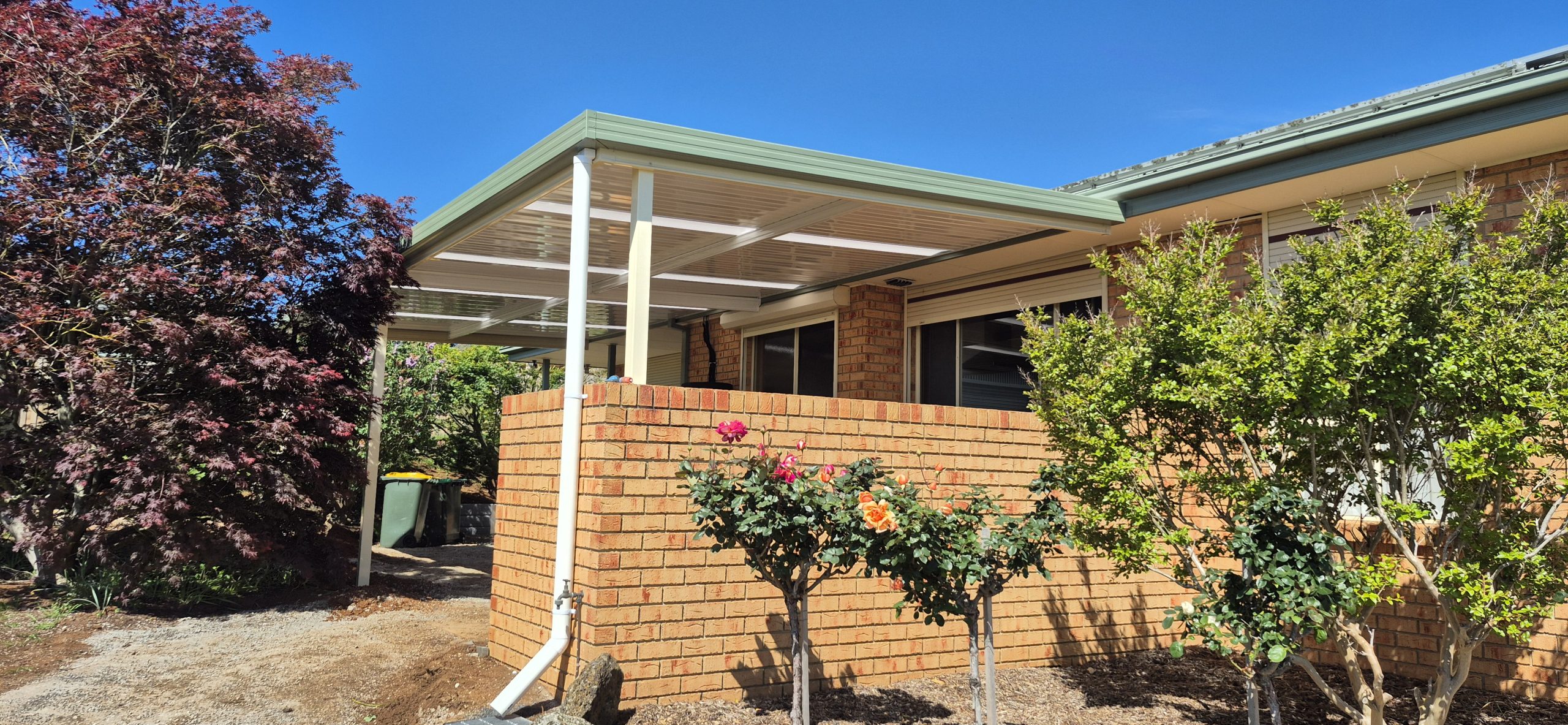
A skillion verandah has a single sloping roof. It is often the most cost-effective design. It tucks under existing eaves cleanly. The look is simple and practical. Used well, it gives you a durable verandah without competing with the home's existing rooflines.
Freestanding Verandah
A freestanding verandah is detached from the house. It is the right call when an attached design would compromise rooflines, daylight, or an existing eave. It also works for outdoor rooms placed away from the main house. Materials usually pair Colorbond steel roofing with timber or steel posts for durability. Ofcourse, with the final colour chosen to suit the existing home.
Which one do you think fits your home? Let’s talk.
The Three Things Every Verandah Design Has to Get Right
Roof, depth, post placement, orientation. These decisions look small on a plan. Lived with for ten years, they decide whether the verandah improves the home. Three considerations carry most of that weight: light, shelter, and comfort.
Get them right together, and the verandah works year-round. Get one wrong, and the other two cannot save it. Here is what each one actually means in practice.
Light: What the Roof and Ceiling Above You Decide Below
Will a verandah make my home darker?
The honest answer is yes, a little. Any roofed structure attached to the home reduces light inside. The real question is how much, and where, and whether the trade-off is worth it.
A verandah changes interior light in five ways: it cuts direct sun on the windows behind it; softens the remaining light into a gentler, diffused glow; reduces glare on screens and dining tables; lowers heat gain through the glass; and brings down the ambient brightness of the rooms closest to it.
Most of that is good. The ambient drop is the part to design around.
Roof material decides how the room reads.
Material | Light Effect | Best For |
|---|---|---|
Colorbond Steel | Full block, full shade. Room feels cooler and calmer, but visibly dimmer. | Maximum shelter, modern homes |
Polycarbonate | Lets sunlight through (clear, translucent, or tinted). Room stays bright. | Bright interiors, period homes |
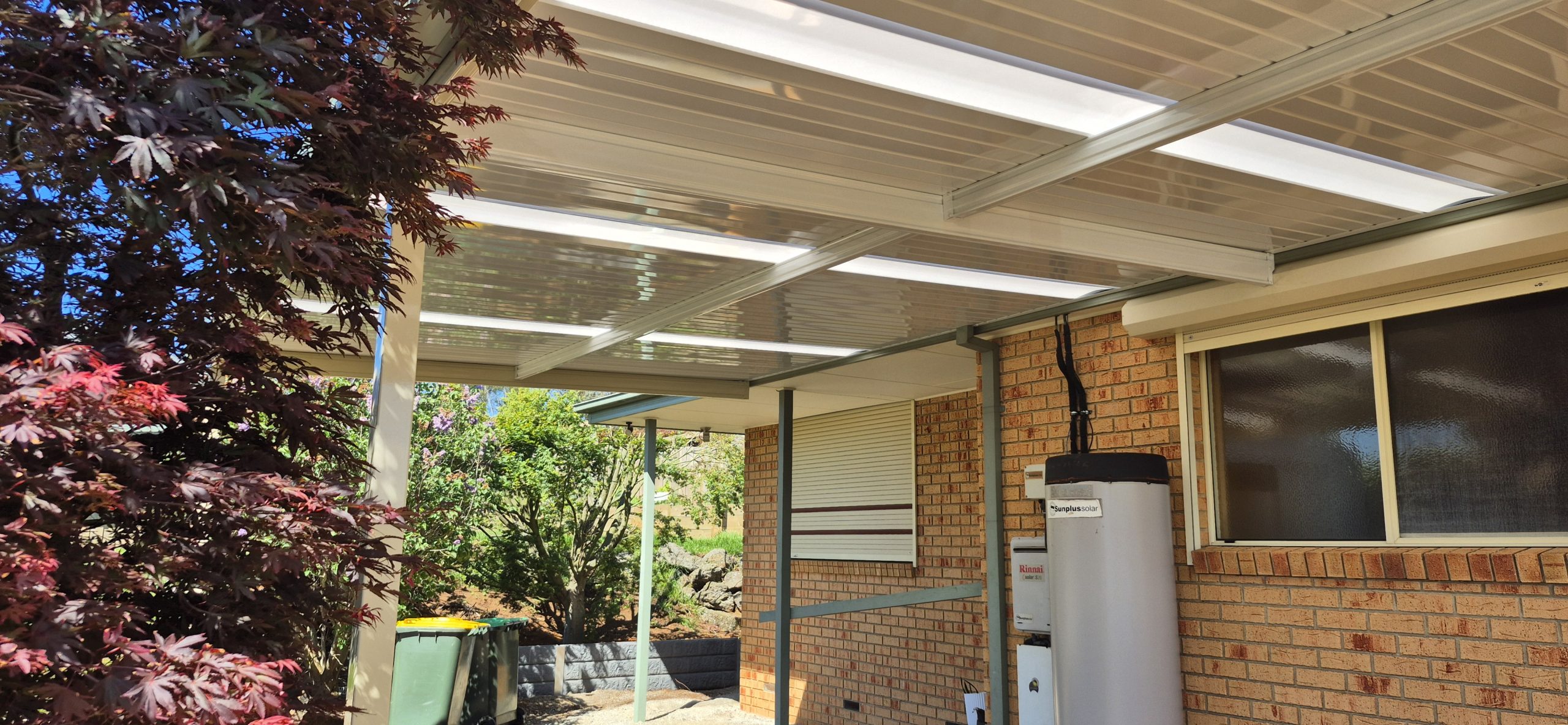
Insulated Panels | Full block plus thermal performance. Same dimming as Colorbond, measurably better summer comfort underneath. | Year-round comfort, all climates |
Then there is roof height and pitch. A higher ceiling lifts reflected light back into the home. A low-pitched skillion can darken adjacent rooms more than a gable of the same depth. This is simply because the roofline sits lower against the window.
Two verandahs of identical footprint can leave a kitchen feeling sunny or sullen.
Shelter: Will Your Verandah Remain Functional
Real shelter handles three things. Sun, rain, and wind. Whether your verandah gets used depends on whether the design respects all three.
Roof style handles weather differently.
A gable handles rain runoff cleanly. A flat roof handles sun well but needs the correct fall for rain. Louvre and screen systems handle all three at higher complexity. Adjustable blinds add control on exposed sides where wind and afternoon sun are the issues.
Depth decides how far shelter actually reaches.
The minimum useful depth sits around 2.5 to 3 metres. Anything shallower, and rain still drives onto your back door in a southerly. The depth that feels generous is closer to 3.6 metres. It’s where a full dining setting fits comfortably under cover.
Post placement decides whether a verandah extends the home.
Posts need to clear views, allow traffic flow, work with door swings, and match the architectural rhythm of the house. A badly placed one becomes too noticeable (and bothersome).
Open, partly roofed, or fully roofed.
This is the trade-off most homeowners do not realise they face. Full shelter equals full shade. A partly roofed structure or a louvre roof gives you optional shelter.
Comfort: Relax in a Stylish Space Built for Both
Comfort is the third pillar. It pulls together everything above.
Summer heat.
The roof material that blocks the most light is not always the one that keeps the space coolest. Insulated panels reflect heat and hold an air gap. So the underside stays cooler than Colorbond alone. Polycarbonate, despite being translucent, can trap more heat than people expect.
Winter warmth and aspect.
This is where orientation matters most. A north-facing verandah in Gippsland needs different design treatment from a west-facing verandah on the same block. The Australian Government's YourHome guide calls orientation the single biggest passive-design lever in any climate-responsive home. North-facing wants depth and pitch that allow low winter sun to reach the windows behind. West-facing wants screening or louvres for late-afternoon glare in summer.
Ventilation and airflow.
Open ends keep the air moving. Gable breezeway gaps lift hot air out the top of the space. A ceiling fan pre-wired into the design costs little to plan for and a lot to retrofit. Wraparound and enclosed verandahs need airflow worked out at the design stage.
Which side of the home benefits most.
In the Victorian climate, north-facing is the best all-rounder. Sun in winter, shade in summer with the right depth. East-facing gives soft morning use. West-facing needs shade strategy or it becomes unusable in February. South-facing stays cool and shaded, but loses winter sun. That’s why it works best as a sheltered alfresco nook rather than a year-round living space.
Verandah Designs and Colour Choices for Gippsland and the Latrobe Valley
Gippsland is not a one-season climate.
Winters are cool and damp. Summers swing warm to genuinely hot. Storms roll through often enough that the wind matters.
A verandah designed for a Sydney brief will quietly underperform here.
As Style Curator notes, Australian climates swing between frosty winters and extreme summers. Roofing material has to be picked to withstand both. In Gippsland, that swing is sharper than the coastal averages suggest.
The roof choice, the depth, the post anchoring, even the gutter capacity. All of it shifts when the build sits in Moe, Traralgon, Warragul, Drouin, or Morwell.The other shift is the homes themselves. Country weatherboards, brick-veneer family homes, period cottages, and modern rural builds all live across the region. A generic kit verandah, dropped onto any of them, tends to read as imported. A custom verandah design reads as part of the house from the road.
Site conditions then change the design again. A sloped block changes post lengths and footing depth. An established garden may limit where posts can land. Existing eave heights decide whether the new roof tucks under, clears over, or has to step around.
It is the same reason our verandah builders Traralgon work begins with the home and the block in front of us. We don’t do cookie-cutter verandahs.
Seeing Your Verandah Design Before You Commit
The single hardest thing about a verandah is picturing it before it exists.
You can sketch it. You can stand in the backyard and gesture at the roofline. But the moment of truth, will this actually look right on your home? 3D modelling closes this gap. We render the verandah against your actual house. From the angles you will see it every day. Roofline integration. Post placement. Daylight impact through the living-room window. Architectural fit. All visible before the build, while changes still cost nothing.
A fixed-price quote does the same job on the money side. It should tell you what is included, what is not, and what triggers a variation. You should not have to commit to a verandah on faith. You should be able to see it, price it, and approve it. In that order.
At Villafab, registered builders handle this end-to-end. The Victorian Building Authority requires anyone carrying out domestic building work valued above the regulated threshold to be registered. It is the baseline that separates a builder accountable for the work from someone who simply quotes for it.5.0
★★★★★ Google Rating
35+ verified reviews via Trustmary
★★★★★
We are very happy with our new Carport, Sunroom and Veranda! Colin and Gerry are true professionals with an eye for detail and craftsmanship. They worked seamlessly with all the others tradies on site to deliver a beautiful result on time and on budget. We recommend them very highly!
Argyro G.
★★★★★
A big thankyou to both Colin and Jerry for organising / building our pergola. - It looks fantastic and only took a couple of days to put up. They handled all the paperwork (permit applications, etc.) and just took any stress out of the process. Very clear communication, professional and at a reasonable price. Honestly, would recommend these guys to anyone and very happy with the end result. 
David
★★★★★
We love our patio.. great work to colin and gerry.. you did a great job. You guys are great to talk too.. The workmanship you did on the patio was 100%.. We have had a patio done before, with another company wasn't as great workmanship as this one.. We are both already enjoying it.. Thanks again Colin..
Kerry L.
★★★★★
Easy to talk too, conscience & work completed in a timely manner. Highly recommend.
Dianne T.
A little, yes. Any roofed structure attached to the home reduces ambient light in the rooms behind it. Designed well, the trade-off is small.
The minimum useful depth sits around 2.5 to 3 metres. A full outdoor dining setting fits comfortably from about 3.6 metres. Shallow verandahs are the single most common regret we see.
A verandah is roofed and attached to the home. A pergola has an open or partly open roof and is often freestanding. One is built for year-round use. The other defines an outdoor space without committing to full shelter.
North-facing is the best all-rounder in the Victorian climate. Winter sun where you want it, and easy shade in summer with the right depth. East-facing works well for morning use. West-facing needs a deliberate shade strategy or it becomes unusable in February.
It can, if the roof material is wrong for the aspect. Polycarbonate can trap more heat than people expect on hot afternoons. Insulated panels reflect heat and hold an air gap, which keeps the underside measurably cooler.
Designing a Verandah For A Timeless Rustic Architecture
The biggest verandahs aren't the ones that get used. The well-designed ones are.
What separates the two is rarely the price, the materials, or even the builder. It is the quality of the decisions made before the build started.
The roof that suits the aspect. Depth that survives a southerly. Orientation that lets in winter sun without trapping summer heat. Post placement that disappears against the home rather than blocking the view.
This is what light, shelter, and comfort really come down to.
Do not commit to a verandah you cannot yet picture, priced in a way you cannot yet verify. The right verandah is the one you approve with eyes open. On your home, at a fixed price, before any work begins.
The first step is a conversation, no pressure, no hard sell. Tell us about your home and outdoor area. We'll help you work out the right fit and what it would realistically look like.