
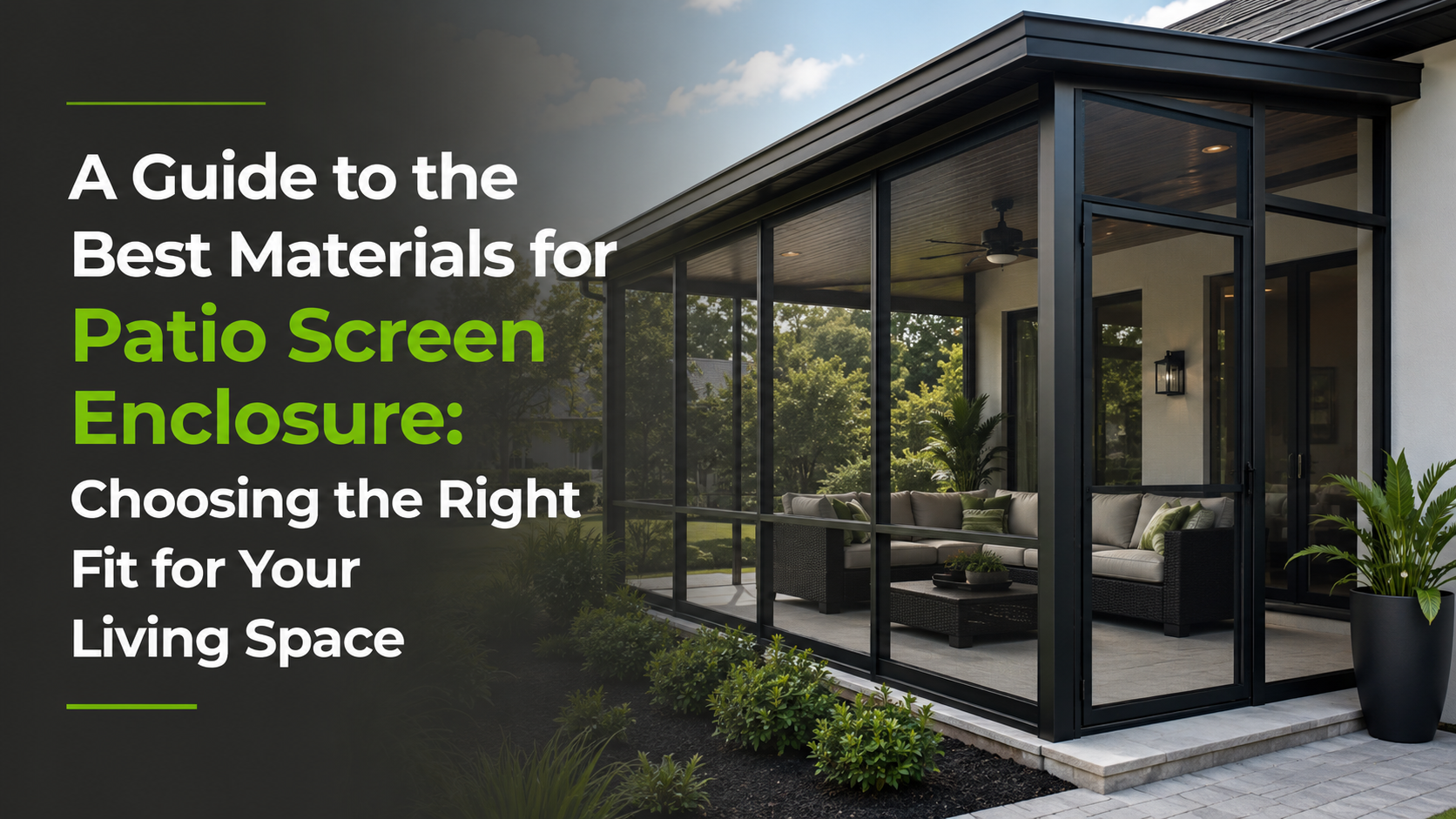
A Guide to the Best Materials for Patio Screen Enclosure: Choosing the Right Fit for Your Living Space
By: Colin Beer, registered builder in Gippsland under DB-U 12691
Summer evenings on the back patio should be one of the simple pleasures of owning a home in Gippsland.
Instead, this time gets cut short by mosquitoes, wind, or a space that just never quite feels finished. The outdoor area sits there, half used, every season. You picture how good it could be with the right setup, and you start looking into screen enclosures. Then the research begins, and the more you read, the less certain you feel about what's actually right for your home. After years of building outdoor structures across Gippsland, we've seen this exact moment play out hundreds of times.
35+
Google Reviews
Verified 5-star reviews from Gippsland homeowners via Trustmary
3D
Design Modelling
See exactly how your structure will look on your home before you commit
E2E
Permit Handling
Council approvals managed end-to-end. No paperwork headaches for you
DB-U
Registered Builder
Colin Beer, DB-Unlimited 12691, registered builder on every project
The confusion is the hardest part of the whole process.
Every supplier seems to recommend whatever they happen to stock. Every quote covers a slightly different scope. One company swears by aluminum frames, while another pushes a particular mesh. Pricing varies wildly with no clear reason. Trying to compare options apples to apples becomes almost impossible.
This guide is here to make the comparison easier.
We're walking through screen enclosure materials honestly, covering both frames and mesh. The focus is on what genuinely holds up in regional Victorian conditions. You'll see where each material shines, where it falls short, and how to match the right choice to your patio. By the end of it, you'll have a clearer view of your options and more confidence in your decision. You'll also have the kind of peace of mind that comes from knowing your outdoor living space is built to last.
Why Screen Enclosure Materials Matter More Than People Think
The material choice is the product.
Most outdoor builds are defined by their shape. A pergola is a frame and a roof, and the look comes from those two things. An outdoor screen enclosure works differently. The whole experience of the structure comes down to how the frame, mesh, fixings, and finish interact with each other.
Get one of those layers wrong and the whole thing feels off, even if the design was good on paper.
Several materials are commonly used across this type of enclosure. Each of them behaves a little differently in the wind, sun, and seasons. None of this means you need to become an expert before you make a call on a screen room. The aim is simpler.
You just need to understand the trade-offs well enough to ask the right questions of whoever ends up building your outdoor area.
Screen Enclosure Frame Materials: The Structural Foundation
The frame is the part of the screen enclosure homeowners notice least and rely on most.
It carries the load, defines the shape, and quietly decides how the enclosure ages over the years. Most failures in older screen enclosures start at the frame, not the mesh. Get this layer right and everything else becomes easier to choose.
Four materials cover almost every residential build in Australia. Aluminum, steel, vinyl, and timber. Each brings something different to the table, and each one has a use where it genuinely shines.
Aluminum Frames: The Industry Standard for Durability
Aluminum frames dominate the category for good reason.
The strength-to-weight ratio is excellent, and corrosion resistance is built into the metal itself. Once the structure is installed, the maintenance burden stays close to nothing. Powder-coat finish options also open up real flexibility for design integration.
Colour matching is available through systems like Dulux and Interpon. This makes it much easier to blend the frame into the home.
A few specifications matter when comparing aluminum screen enclosure frames.
Common profile sizes sit around 2"x2", and gauge typically ranges from 0.050 to 0.062. The heavier 0.062 gauge suits longer spans and more exposed sites. On the other hand, 0.050 handles standard residential runs without trouble.
These are the materials used in most well-built screen enclosure frames across Gippsland today.
Steel and Galvanised Steel Frames: Strength with Trade-offs
Steel earns its place when a frame needs to handle longer spans or heavier loads.
Aluminum can do a lot, but at a certain size and weight, steel becomes the more efficient choice. The trade-off is corrosion management. Galvanised or treated coatings have to stay intact for the frame to last. Coating failure is almost always where steel begins to break down first.
Quality matters more than usual here.
A well-built galvanised steel frame can be durable and resistant to a lot of wear over time. A poorly coated one, on the other hand, fails faster than aluminum would have in the same spot.
Steel is less common in residential screen enclosures. For larger or more exposed builds though, the option remains worth understanding.
Vinyl and PVC Frames: Flexibility and Low Maintenance
Synthetic frames bring a different set of strengths to the conversation.
Vinyl and PVC resist fading and warping over time, and they avoid the rot risk altogether. The appearance of wood is something the better synthetic profiles can mimic surprisingly well. None of the upkeep timber demands comes with it.
Ease of installation can also be a factor, particularly for simpler residential configurations. Vinyl and PVC are cheaper in some setups.
In custom Australian residential builds, aluminum is usually preferred for its longer lifespan.
Timber Frames: Traditional Look, Higher Upkeep
Timber holds genuine appeal for heritage homes or properties with rustic character.
The appearance of wood integrates beautifully with timber detailing elsewhere on the home. There's also a warmth to a timber frame synthetics rarely match convincingly.
Maintenance is the honest part of the conversation.
Timber needs regular staining or painting, and rot or warping become real risks in damp Gippsland winters if upkeep slips. Across the materials used in this category, timber is the least forgiving choice.
A homeowner who wants a low-effort build is usually better served elsewhere.
Screen Mesh Materials: Choosing the Right Weave
The mesh is the second half of the system, and the half most homeowners regret getting wrong.
A frame holds the structure up. The mesh decides what gets in, what stays out, how much light passes through. It also considers how the whole patio screen enclosure feels to sit inside on a Sunday afternoon.
The right weave can make a screened patio feel calm and integrated with the home. The wrong one turns the same space into a place no one really wants to use. Six mesh options cover almost every Australian residential build, and each one suits a different household.
Fibreglass Mesh: The Budget-Friendly Standard
Fibreglass is the default for good reason. Visibility is strong, repairs are simple, and the cost stays well below every other option.
The lifespan is shorter than the alternatives, sitting around seven to ten years in typical conditions. Moderate exposure and average household use is where fibreglass shines. It remains one of the best mesh choices on the market for these conditions.
Aluminum Mesh: Sharper Visibility, More Structure
Aluminum mesh steps up from fibreglass on both durability and outward visibility. The weave holds its shape better across larger panels, which matters when a screen room covers a longer span.
Cost runs slightly higher than fibreglass, though not dramatically so. Installation is a touch less flexible because of the rigidity in the weave. For homeowners who want a crisper view through the screen materials, the upgrade earns its place.
Pet-Resistant Mesh: Built for Active Households
Vinyl-coated polyester mesh is built to withstand more pressure than fibreglass can handle. The weave is roughly three times stronger. This helps keeps it intact against scratching, leaning, and the general wear of an active household.
Airflow and visibility drop a little because of the thicker fibres. For homes with dogs or kids who use the screen mesh as a leaning post, the trade-off is worth it.
Solar and UV-Reducing Mesh: Protection From the Sun
Solar mesh blocks a high percentage of UV rays and cuts heat and glare noticeably. Gippsland sits at a southern latitude, but summer UV exposure stays surprisingly high. The intensity is enough to fade furniture and warm an enclosure faster than most people expect.
Darker mesh colours, counterintuitively, actually improve outward visibility while reducing glare. The result is a cooler, more comfortable enclosed patio in the hotter months of the year.
Stainless Steel Mesh: Maximum Durability and Security
Stainless steel is the high-end option, and it earns the price tag through long service life and genuine strength. The same weave handles insect protection and serves a real security function.
For households where the enclosure also acts as a boundary, the combination works well.
Cost sits significantly higher than every other mesh option. Buyers who want the longest possible lifespan tend to land here. The best materials available in this category are stainless steel.
Fine-Weave and Privacy Mesh: Bug Protection and Visual Screening
Fine-weave mesh runs around a 20x20 count. The weave is tight enough to keep out midges, gnats, and the smaller bugs standard mesh lets through. Privacy mesh takes a different angle. It uses a vinyl-laminated weave to add visual screening to lower panels.
The bug-proof benefit is genuine, and the privacy variant works well where the screen faces a neighbour or street. Both options can be combined with standard mesh in the same enclosure, depending on the section.
According to New Horizons, "If neighbors, streets, or passersby make your patio feel exposed, privacy mesh provides a visual barrier. You can still see out reasonably well, but visibility into your space is significantly reduced."Comparing Screen Patio Enclosures Materials Side by Side
Sometimes the quickest way to weigh several materials is a clean side-by-side view.
The table below pulls the most important factors into one place. You can match each option against how you plan to use the screen enclosure and what kind of durability you need.
Use it as a quick-reference before any conversation with a builder.
Material | Best for | Durability | Visibility | Maintenance | Cost band |
|---|---|---|---|---|---|
Aluminum frame | Most builds | High | _______ | Low | Mid |
Fibreglass mesh | Standard use | Moderate | High | Low | Low |
Aluminum mesh | Larger panels | High | High | Low | Mid |
Pet-resistant mesh | Active households | Very high | Moderate | Low | Mid–High |
Solar mesh | Sun-facing aspects | High | Moderate | Low | Mid |
Stainless steel mesh | Security + longevity | Very high | High | Low | High |
What Gippsland Weather Does to a Screen Enclosure Over Time
Gippsland has a more demanding weather year than most outdoor living guides bother to acknowledge.
UV exposure in Victoria stays high right through summer, despite the southern latitude. Solar gain and gradual material fade are real concerns for any frame or mesh chosen without UV rays in mind. Humid summers swing into cool, wet winters within months.
This puts every fixing and frame join through expansion and contraction cycles. The fixings either hold up to the movement or quietly fail over time.
Frost mornings add another layer of stress when working on the sealant and finish coatings of an enclosure. Bushfire smoke seasons leave fine particulate sitting on the mesh. Left in place, the build-up accelerates fibreglass degradation faster than most homeowners realise.South Gippsland properties get salt air folded into the mix as well, depending on how close to the coast they sit.
Australia delivers a varied weather year, and Gippsland delivers a particularly varied slice of it. As stated by Growing Southern Gippsland, The Southern Gippsland Climate is characterised by high variability. This climate variability means that some periods are cooler and wetter than average, while others are hotter and drier."
Choosing materials that genuinely stand the test of time here is about a combined load. The right call means choosing for protection against the elements across the whole year, not one season of it.
A space that stands the test of a generic outdoor use case is not the same as one built to withstand a Gippsland year. The materials need to be durable and resistant across all of it, not just on the easy days.
How Screen Materials Last in an Enclosed Patio
Lifespan is where the frame and the mesh part ways.
In Australian conditions, fibreglass mesh sits around seven to ten years before it needs replacing, while aluminum and pet-resistant mesh stretch closer to ten or fifteen. Stainless steel runs the longest of the mesh options at fifteen to twenty plus.
Aluminum frames with quality powder-coat outlast every mesh choice, often clearing twenty-five years with light upkeep. The frame is the long investment and the mesh is the consumable, so it helps to plan the build around that difference.
Once you do, the durability and resistance of the screen enclosure stops feeling like a gamble.Maintenance and What to Expect From Your Screen Room
Looking after a screen room in Gippsland is genuinely simple if the right materials are in place to begin with.
A rinse with mild soap and water twice a year handles the routine cleaning. Spline tension is worth an annual check since a sagging mesh is almost always a spline issue rather than a mesh one.
According to Lanai Guy, "Overgrown tree branches can damage the screens and leave unsightly marks, and pollen and bird droppings can cause stains."
Fasteners are worth a look for staining after a wet winter, and any vegetation brushing the screen mesh should be trimmed back before it starts to rub through. The one habit to avoid is pressure-washing.
The force damages the weave and pushes water into the spline channels. This leads to bigger problems down the line.
What Drives the Cost of the Best Patio Screen Enclosure for Your Outdoor Living Space
Cost on a patio screen enclosure rarely comes down to one thing.
Span is usually the first driver, since longer runs need heavier frame gauge to stay stable. Mesh upgrade is the second, with pet, solar, and stainless options stepping the cost up.
The way the enclosure is attached to the main house shapes how clean the finished build looks. Finish quality plays its part too, with premium materials and good powder-coat finishes holding up longer than cheaper alternatives.
Door count rounds it out, since every additional door adds frame and hardware cost.
Cheap quotes usually compromise on one or two of these to hit a target number. The highest quality materials don't always mean the highest spend.
The honest version of the conversation is one where every trade-off is visible before the build starts. A real addition to your home earns its price tag through how well it holds up across a Gippsland year.
Which one do you think fits your home? Let’s talk.
How a 3D Design Preview Helps You Create the Perfect Screen Enclosure
Material decisions get a lot easier when you can actually see them in context.
A 3D preview shows how the chosen frame profile, mesh colour, and finish will sit against your house before any commitment is made. Once the design is rendered against your real space, indoor and outdoor living start to feel genuinely connected.
The visual proof is what helps you transform your outdoor area and create a space you'll actually want to use. Real peace of mind comes from seeing it before you sign for it.
5.0
★★★★★ Google Rating
35+ verified reviews via Trustmary
★★★★★
We are very happy with our new Carport, Sunroom and Veranda! Colin and Gerry are true professionals with an eye for detail and craftsmanship. They worked seamlessly with all the others tradies on site to deliver a beautiful result on time and on budget. We recommend them very highly!
Argyro G.
★★★★★
A big thankyou to both Colin and Jerry for organising / building our pergola. - It looks fantastic and only took a couple of days to put up. They handled all the paperwork (permit applications, etc.) and just took any stress out of the process. Very clear communication, professional and at a reasonable price. Honestly, would recommend these guys to anyone and very happy with the end result. 
David
★★★★★
We love our patio.. great work to colin and gerry.. you did a great job. You guys are great to talk too.. The workmanship you did on the patio was 100%.. We have had a patio done before, with another company wasn't as great workmanship as this one.. We are both already enjoying it.. Thanks again Colin..
Kerry L.
★★★★★
Easy to talk too, conscience & work completed in a timely manner. Highly recommend.
Dianne T.
There is no single best answer, only the best materials for your specific site. An aluminum frame paired with the right mesh for your exposure, household, and use is what most Gippsland homes need.
Aluminum is the standard for the frame, with the mesh varying by use case. Fibreglass, aluminum, pet-resistant, solar, and stainless steel are the common materials used across most Australian residential builds.
Yes, standard mesh keeps out flies and mosquitoes without trouble. For finer bug proof protection against midges and gnats, a tighter fine-weave is the right screen to specify.
An aluminum frame with quality powder-coat will often clear twenty-five years with light maintenance. Mesh lifespan ranges from seven to twenty plus years depending on the type, with durability scaling up as you move from fibreglass to stainless steel that can withstand more exposure.
A Final Word on Choosing Screen Enclosure Materials for Your Home
The right combination of frame, mesh, and finish should give years of comfortable use. It should never feel like a decision you have to second-guess.
A screen enclosure built well integrates into the home rather than sitting beside it. Weighing options for a new patio enclosure, patio screening, or screened patio enclosures across Gippsland is rarely simple. The next step is a conversation rather than another quote. A short consultation and a 3D preview tell you more than any brochure. The visual proof is what makes the difference for your screen room and outdoor living space.
Villafab is built for Gippsland homes, Gippsland weather, and the way local households actually live. As a registered builder, we've seen what works and what doesn't, making the decision easier. Whatever the project, with the right materials, the right structure turns an outdoor patio into a real part of the home.
See it clearly. Build it properly.
The first step is a conversation, no pressure, no hard sell. Tell us about your home and outdoor space. We'll help you work out the right fit and what it would realistically look like.