
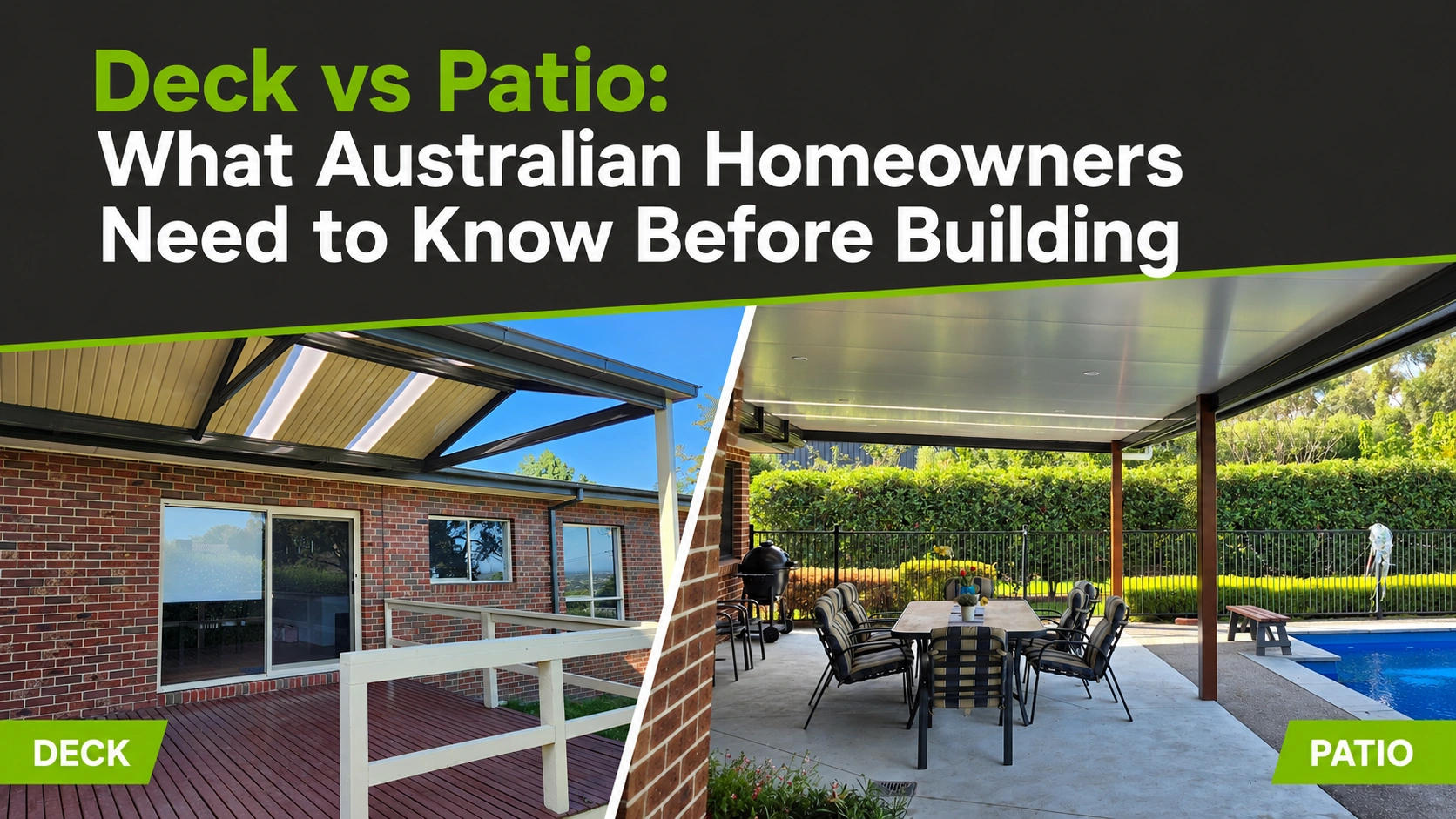
Deck vs Patio: What Australian Homeowners Need to Know Before Building
By: Colin Beer, registered builder in Gippsland under DB-U 12691
Two quotes on the table. One for a deck, one for a patio.
The goal sounds simple. An outdoor space that gets used more often. A finish that suits the house. Somewhere the family actually wants to sit on a Sunday afternoon. But the numbers don't line up, and the materials sound similar but read differently.
Neither structure is automatically the right answer.
35+
Google Reviews
Verified 5-star reviews from Gippsland homeowners via Trustmary
3D
Design Modelling
See exactly how your structure will look on your home before you commit
E2E
Permit Handling
Council approvals managed end-to-end. No paperwork headaches for you
DB-U
Registered Builder
Colin Beer, DB-Unlimited 12691, registered builder on every project
If the back door sits above the ground or the block slopes, lean deck. If the ground is level and the priority is low upkeep, lean patio. Deck builders will say deck and patio specialists will say patio. Neither view knows your home, your aspect, or how Gippsland weather treats materials over time. The better question is what actually suits your block.
Over a decade of building decks and patios across Gippsland makes the trade-offs predictable.
This guide walks through the patio vs deck question the way a registered builder would. We cover costs, materials, permits, design fit, and what changes if your block isn't textbook-flat. The aim is a finished structure that suits the home. By the end, the right choice should be clear.
Deck vs Patio at a Glance
Before we get into the nitty gritty of what suits your home, it helps to see the main differences side by side.
Decks and patios can both create a great outdoor space. But, they behave very differently once you factor in height, cost, maintenance, permits, and the slope of your block.
Use the table below as a quick guide, not a fixed quote. After all, every site has its own surprises.
Material | Elevation | Indicative AUD/m² | Lifespan | Maintenance | Permit triggers | Best terrain fit |
|---|---|---|---|---|---|---|
Treated pine deck | Raised | $200–$300 | 10–15 yrs | Annual sealing/oiling | Often required if >1m or attached to the house | Sloped or uneven |
Hardwood deck | Raised | $320–$500 | 15–25 yrs with care | Bi-annual sealing | Often required if >1m or attached to the house | Sloped or uneven |
Composite deck | Raised | $250–$450+ | 25–30 yrs | Wash only | Often required if >1m or attached to the house | Sloped or uneven |
Plain concrete patio | Ground level | $60–$130 | 30+ yrs | Very low (occasional sealing) | Often exempt at ground level | Flat |
Decorative concrete (incl. exposed aggregate) | Ground level | $75–$200 | 30+ yrs | Low (periodic sealing) | Often exempt at ground level | Flat |
Pavers / natural stone | Ground level | $40–$150 | 25–40+ yrs | Low (weed joints, occasional reset) | Often exempt at ground level | Flat to mild slope |
Deck vs Patio vs Porch vs Terrace: What's Actually Different?
In Australia, these words get mixed around a bit. Before comparing costs or materials, it helps to know what each one actually means.
According to NT Pavers, a patio means the paved surface connected to the home. But in other definitions, it might also mean the covered outdoor room sitting over it. For this guide, we’re using “patio” to mean the surface underfoot.
What is a deck?
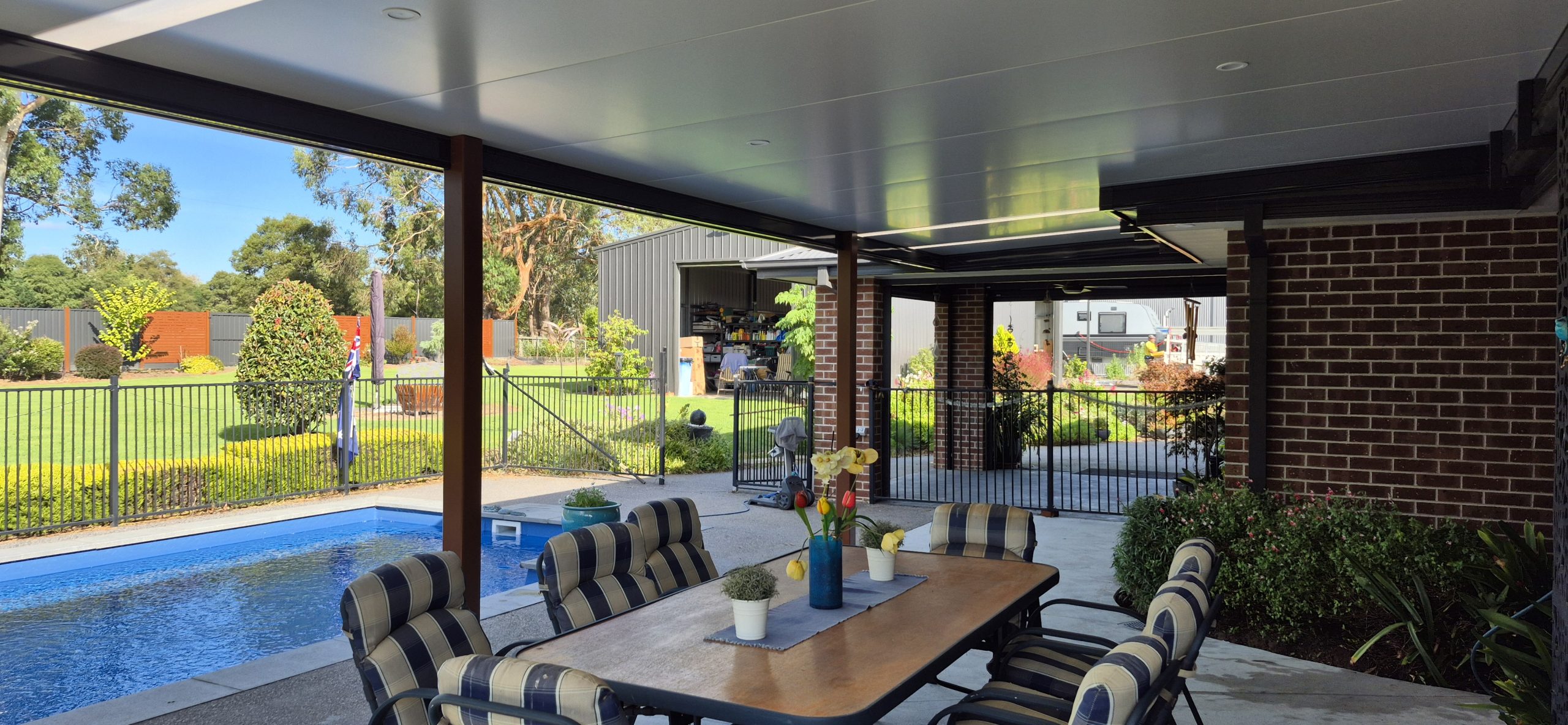
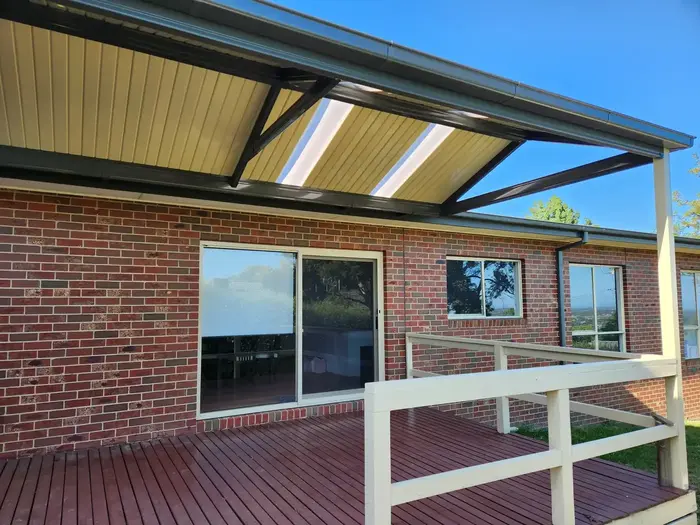
A deck is an elevated platform built from timber decking or composite deck boards. It's typically attached to the house or freestanding. Common timber materials include treated pine and hardwood. A raised deck more than a metre above the ground usually needs a balustrade. On sloped land, a wood deck or wooden deck slots in easily. A ground level patio in the same spot needs retaining.
What is a patio?
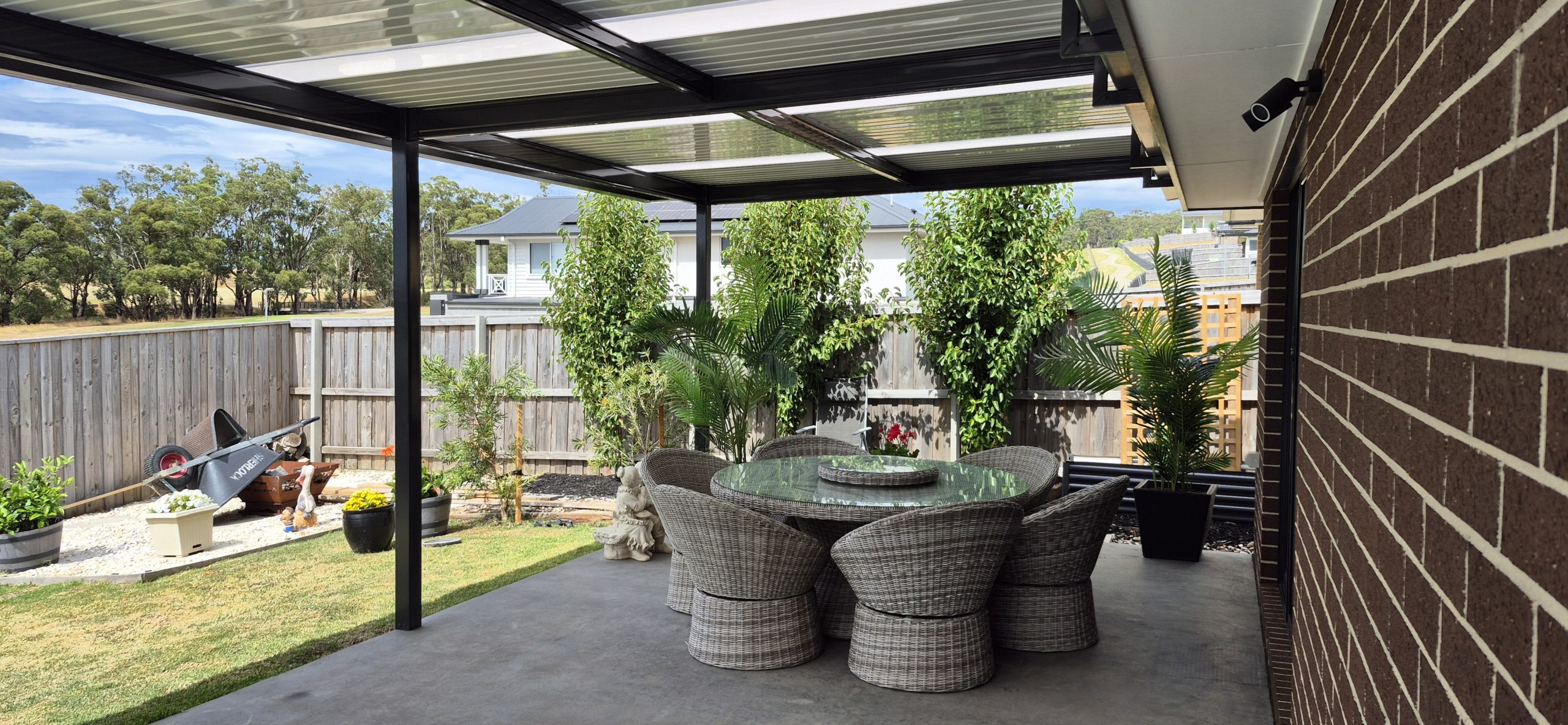
A patio is a paved area or concrete slab that sits directly on the ground. Common patio flooring materials include plain concrete, pavers, natural stone, and brick. The patio area pairs naturally with landscaping. To build a patio, you pave a level surface or make one level first. On a flat site, the job goes down quickly.
What is a porch?
A porch is a covered structure attached to the house. It sits at the front, side, or back, depending on the design. In Australian usage, "porch" is often used interchangeably with "veranda." A porch is generally elevated slightly above ground level. Unlike a deck or patio, a porch isn't a question of covered or uncovered. It's covered by definition.
What is a terrace?
A terrace is a level outdoor area, typically paved. It may sit at ground level or be raised. Often it's part of the landscaping on a block of land rather than the building. The word is less common in Australian residential builds. You'll see it more often on design plans than in everyday conversation.
The Good and the Bad of Deck and Patio for your Outdoor Space
No option is perfect. The right one is the one that solves the problem your block is actually giving you.
Pros and Cons When You Build A Deck
Pros:
Handles uneven terrain without turning the yard into a major earthworks job.
Suits elevated back doors where a patio would need too much filling or retaining.
Usually feels cooler underfoot than concrete on hot days.
Works well with built-in seating, steps, rails, and split-level outdoor living.
A well-designed new deck can support a stronger return on investment at resale.
Cons:
Higher upfront cost than a simple patio on flat ground.
Timber needs annual or bi-annual sealing to reduce moisture damage.
Timber decking has a shorter lifespan than masonry. Think roughly 10-15 years for timber, or 25-30 years for composite.
A raised deck can trigger more permit and balustrade requirements.
Pros and Cons When You Build a Patio
Pros:
Lower patio cost when the site is already flat.
Minimal maintenance compared with timber.
Long lifespan. A well-built concrete or paved patio can last 30+ years.
Safer, sturdier base for fire pits, outdoor kitchens, and heavy furniture.
Adds practical value to your property without needing much yearly attention.
Cons:
A sloped yard can make the price climb quickly, especially if retaining walls are needed.
Concrete can get hot underfoot in summer.
Once the finished patio is poured, changing the shape or layout is not simple.
When a Patio and a Deck Work Together
Deck and patio can actually go hand-in-hand. And for some homes, it is even the better answer.
A raised deck can sit off the back door where the house is higher. Then, step down to a paver or natural-stone patio further into the yard. That gives you the best of both: the deck handles the slope, and the patio creates a solid ground-level zone for dining, a fire pit, or outdoor furniture.
A deck and patio combination also helps split the outdoor space into clear zones. Cooking near the kitchen. Sitting or entertaining further out. More flexibility, less forcing one structure to do everything.
Timber Deck vs Concrete Patio (and Other Materials to Consider)
Timber decking gives warmth, texture, and a softer feel underfoot.
It also works well when the yard drops away from the house. Treated pine is usually the entry point. Hardwood and natural timber lift the look, but they also lift the costs of maintenance.
A concrete patio is the practical option on a flat block.
Plain concrete keeps things simple. Decorative concrete and exposed aggregate add more texture without adding much upkeep. The trade-off is heat. Concrete can radiate warmth through summer, especially without shade.
Composite decking sits somewhere in the middle.
It gives you more of the wood deck look, with maintenance closer to concrete. Many composite boards also use recycled content, which matters if sustainability is part of the decision.
Pavers and natural stone are worth a look too. They offer more design flexibility than a slab and are easier to lift, reset, or repair later.
So decking vs concrete is rarely about which one is better. It is about what suits the home, the block, and how much yearly attention you honestly want to give it.
Site, Slope, and Climate: What Your Block Tells You
Your block usually tells you more than the brochure does.
If the block is flat, a patio is usually the simpler choice.
Concrete pours cleanly, pavers go down quickly, and the site often needs less preparation. That is where a patio makes the most sense.
If the yard is sloped or the terrain is uneven, the deck conversation gets stronger. As stated by Hen-House Decks, elevated decks are built specifically for uneven terrain. They rise with the slope instead of fighting it. That is why a sloped block often points toward a deck before a ground-level patio.
An attached deck or freestanding deck can bridge the height difference without forcing the whole yard to be levelled first. A patio on a slope often means retaining walls, drainage work, and extra excavation. That can quietly double the cost.
If there is already a concrete slab, you may not need to start again.
Decking over an existing slab is a common way to refresh a tired alfresco area. It can skip a lot of substructure work and give the outdoor living space a softer, warmer finish. The slab still needs to be checked first. Cracked, moving, or poorly drained concrete can create problems later.
Climate matters too. In Gippsland and the Latrobe Valley, cool wet winters and hot dry summers both have a say.
Timber needs sealing to handle moisture. Concrete needs shade, a roof, or smart placement to stay comfortable through summer afternoons. North-facing outdoor living catches more winter sun, but it can also take more summer heat. Frost on winter mornings plays differently as well. Timber moves. Concrete can crack if the base below it is not right.
Covered or Uncovered: Patio Roof Systems to Consider
Once you know whether the base is a deck or patio, the next question is what goes on top.
Covered or uncovered makes a big difference.
A pergola, patio roof, or insulated panel roof each changes how the space feels in heat, rain, and everyday use. A roof over a deck helps reduce moisture damage and can extend the life of the timber. A patio roof or outdoor blinds can turn a hot concrete slab into a space you actually use through summer.
That roof choice is often the difference between “nice idea” and “we use it every week.”
Price, Permits, and the Bits People Miss
The numbers in the table are a starting point. They are not the whole story.
Real cost moves with site access, soil, attachment method, material grade, drainage, retaining walls, and council fees.
A 30m² job on a tight block with poor access can cost more than a 40m² job on a flat, open site. As hipages said, before pricing an outdoor ground project, homeowners should check whether excavation is needed. Or, if machinery and materials can access the site. A smaller job on a tight block can cost more than a larger one on flat, open ground.
That is why patio cost, deck cost, and quote comparisons can get messy fast.
Permits are another part people underestimate.
An elevated deck almost always needs building approval. A ground-level patio often does not, but in Victoria it still depends on the site, height, attachment, council rules, and bushfire requirements. NSW and Queensland work in a similar way, but with their own exempt-development limits.
This is where a registered builder matters.
You are not left trying to decode approval rules by yourself before you build a deck or build a patio. And when one quote looks dramatically cheaper than the others, look closely at the scope.
The difference is often not price. It is what has been left out. Clear scope matters just as much as the headline number. Most especially if you want lower maintenance costs and less maintenance later.
Reach out to a registered builder that can help guide you.Questions to Ask Before You Commit
The right choice usually becomes clearer when you stop asking, “Which is better?”.
Start looking at your home.
Ask yourself these five questions:
Does the back door sit more than a step above the ground? Lean deck.
Is the block flat? A patio is simpler. If the block slopes, a deck is usually cleaner and cheaper.
How much yearly maintenance are you willing to do? More maintenance makes timber possible. Less maintenance points to concrete, pavers, or composite.
Which way does the space face? If heat, shade, or winter sun matters, the roof decision changes too.
Will you use the space weekly or twice a year? Weekly use justifies a higher spec. Occasional use usually does not.
That is how you get to the right choice without overcomplicating it.
And before signing anything from a builder, ask the questions that expose the real job.
What is included in the fixed-price quote, and what could trigger a variation?
How will the structure attach to the house, and what does that mean for rooflines and waterproofing?
Will I see a 3D design before committing, or am I trusting a flat drawing?
Are permits and council approvals handled, or does that fall back on me?
Whether we end up with a porch or deck or patio, what does maintenance look like in year one, year three, and year seven?
The best answer is not always the fanciest one.
It is the one that makes the build, the cost, and the finished result clear before you say yes.
5.0
★★★★★ Google Rating
35+ verified reviews via Trustmary
★★★★★
We are very happy with our new Carport, Sunroom and Veranda! Colin and Gerry are true professionals with an eye for detail and craftsmanship. They worked seamlessly with all the others tradies on site to deliver a beautiful result on time and on budget. We recommend them very highly!
Argyro G.
★★★★★
A big thankyou to both Colin and Jerry for organising / building our pergola. - It looks fantastic and only took a couple of days to put up. They handled all the paperwork (permit applications, etc.) and just took any stress out of the process. Very clear communication, professional and at a reasonable price. Honestly, would recommend these guys to anyone and very happy with the end result. 
David
★★★★★
We love our patio.. great work to colin and gerry.. you did a great job. You guys are great to talk too.. The workmanship you did on the patio was 100%.. We have had a patio done before, with another company wasn't as great workmanship as this one.. We are both already enjoying it.. Thanks again Colin..
Kerry L.
★★★★★
Easy to talk too, conscience & work completed in a timely manner. Highly recommend.
Dianne T.
On a flat block, a patio is usually cheaper. On a sloped block, a deck often becomes the cleaner and more cost-effective answer.
In Victoria, approval can depend on height, attachment to the house, council rules, and bushfire overlays. NSW and Queensland have their own exempt or accepted-development limits. A registered builder should check the pathway before work starts.
Decks can support a stronger return on investment when they solve height, slope, and outdoor living properly. Patios tend to deliver steady lifestyle value, but suburb, design, and finish all matter.
Yes. It is a common, cost-effective way to soften a tired alfresco area. But, the slab needs to be checked for drainage, cracking, and movement first.
Yes. A raised deck near the back door can step down to a patio further into the yard, giving you zones instead of one space trying to do everything.
Deck VS Patio? Let Your Home Decide
A deck is not better than a patio. A patio is not better than a deck.
The better choice is the one that fits your home’s features. The height, slope of the block, weather it has to handle, and how much maintenance you actually want to do. Flat ground often points to patio. A raised back door or sloped yard often points to deck. Sometimes both make more sense.
If you want clarity before you commit, Villafab can help you compare the options.
The first step is a conversation, no pressure, no hard sell. Tell us about your home and outdoor space. We'll help you work out the right fit and what it would realistically look like.